
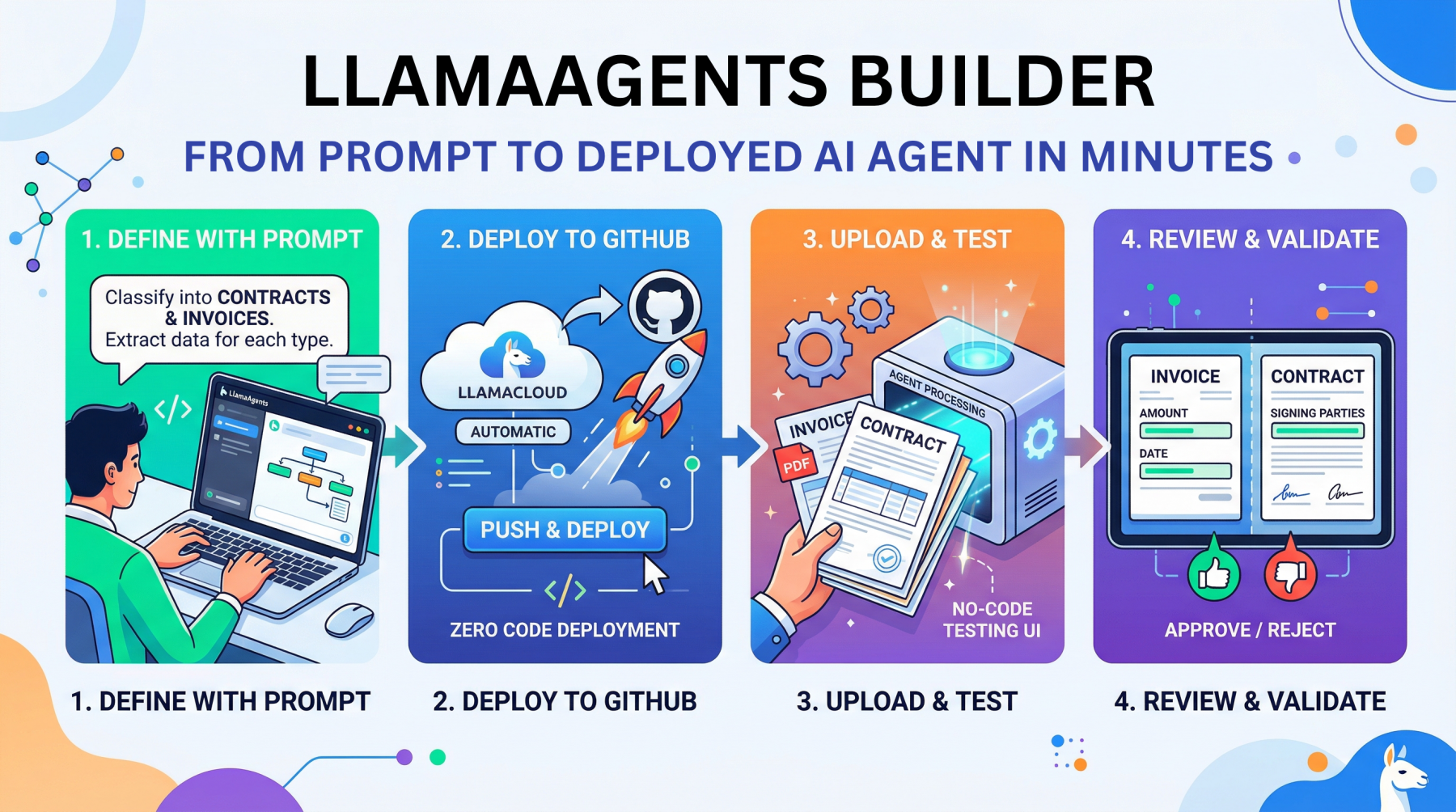
From prompt to deployment
Machine Learning Mastery walks readers through building and deploying AI agents rapidly using LlamaAgents. The article emphasizes a practical workflow: define tasks, structure prompts, manage agent orchestration, and address deployment considerations. The value proposition is clear: developers can move from idea to a working agent with reduced friction, enabling automation across business processes, document analysis, and data-centric workflows. The piece also touches on monitoring, failure handling, and iteration cycles that are essential to a reliable agent-based system.
From a risk perspective, the guide underscores the importance of observability, security, and governance in agent deployments. As agents become more capable, teams must implement checks on decision paths, data access, and potential bias in task execution. The article also hints at a growing ecosystem of tooling to manage agents, including orchestration, attribution, and versioning that align with enterprise-grade requirements. For practitioners, this is a practical blueprint for speeding up agent creation while maintaining discipline around safety, evaluation, and auditing.
Looking ahead, LlamaAgents-like tooling will likely become standard in the developer toolkit, facilitating rapid experimentation, prototyping, and scalable deployment of autonomous AI tasks. The broader trend is clear: agents are moving from novelty to mainstream utility in both SMBs and large enterprises, with governance and reliability as non-negotiables.
Questions for readers: What governance controls are essential when deploying autonomous agents at scale? How should monitoring and auditing be integrated into agent pipelines?